
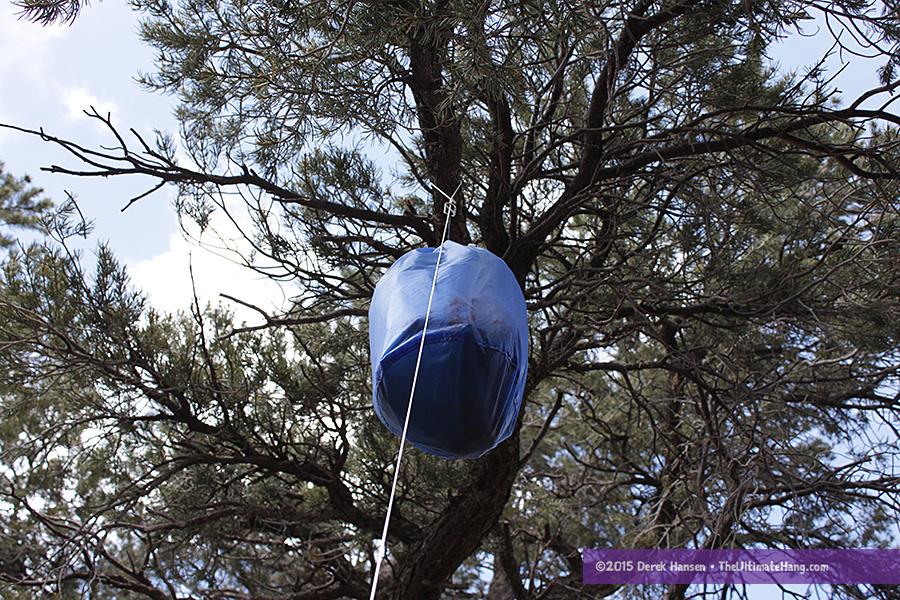
There are multiple techniques to hang a bear bag, but when I first learned the Pacific Crest Trail (PCT) method, it’s been my favorite option where hanging a bag is allowed. The PCT method is actually pretty simple to set up, but is very effective to deter most animals trying to get at your food. Let me be clear that the “PCT Method” is only a name, not an implicit indorsement or recommendation by or on the PCT. You can use this method anywhere it is approved, which, ironically, isn’t along many parts of the PCT where it first got its name. This is because bears have successfully thwarted most hanging techniques—including this one—and in some parks they specifically prescribe bear canisters.
If hanging a bear bag is an approved option for where you’re going, it really is a fairly quick, light, and effective method.
How it works
The PCT method uses a single rope that is tossed over a high, sturdy branch and is then clipped to the bear bag with a mini carabiner. The standing end of the rope is clipped back through the carabiner and then the bear bag is hoisted all the way to the top of the branch. At this point, use a small stick (or even a spare stake) to use as a toggle. Tie a clove hitch with the rope around the toggle as high as you can reach up on the rope. When you slowly release the cord, the bear bag will stop at the mid point when the toggle connects with the carabiner.


Pros
- The PCT method uses less cordage, which can help reduce weight and bulk in your backpack.
- It is harder for critters to foil, compared with a traditional approach of tying the line to another tree..
- “Quick-access” items like toiletries can be stored in a smaller bag and clipped/looped around the toggle so when you pull down the rope the ditty bag comes down while the bear bag goes up when needed in a hurry (no need to bring the whole bag down)
- Works very well in deciduous forests or with pine tree varieties (e.g. Ponderosa Pine) that have overhanging branches.
Cons
- Heavy bear bags make it a little harder to tie the clove hitch around the toggle. Splitting up smellable items into multiple bags can be a downside, but essential for larger groups.
- Doesn’t work well (or at all!) in locations where there is a lack of overhanging branches. Some pine forests, for example, lack sufficient tree variety making it impossible to use the PCT method effectively.
Tips
- I prefer using a slippery line that will glide more easily over the trees and prevent cutting into the bark. I highly recommend the Spectra kit from AntiGravityGear.com, which comes with a lightweight throw bag that doubles as a storage bag for the line. I use a lightweight cuben fiber or silnylon stuff sack as my food bag, which can then double as the bear bag. The cuben or sil fabric is waterproof, which helps to protect my gear when hanging in the rain overnight. All told, this kit can weigh as little as 2 oz (57 g) or less.
- I also recommend the UL Deluxe bear bag kit from AntiGravityGear, which includes the throw rope, silnylon storage bag, and an inner Aloksak oder-resistent bag.
- Another key element to hanging a bear bag is location. You should hang the bag well away (200 ft/60 m) and downwind of your sleeping area. Your kitchen area should also be 200 ft (60 m) from your sleeping site.
- Everything that smells (e.g., food, garbage, hygiene items, food-soiled clothing, etc.) should be placed in the bear bag for safety. Clean stoves, pots, water bottles, and utensils can be safely left in the kitchen area. For more information on bear bagging and respecting wildlife, please visit the Leave No Trace Center.
If you would like to use this illustration in a workshop or training event, please contact me for a high-resolution version.


I first published a rough version of this illustration on HammockForums.net in April 2010, and I’ve updated it for a re-release on my website.


Leave a Reply